

Buying a Tractor Grapple Attachment: What Separates the Best Grapples from the Rest
Updated: Feb 2
A Tractor grapple attachment is among the most searched-for tractor upgrades, and for good reason. Whether you’re clearing land, moving logs, handling brush, or cleaning up storm debris, the right grapple can dramatically increase productivity. But with so many options on the market, choosing the right tractor grapple attachment can be confusing. Many buyers focus on price first. Experienced operators know better. The real difference between grapples shows up months or years down the road, when welds crack, pins wear out, or cheaper steel begins to bend under real work. This guide breaks down what actually matters when choosing a grapple and why quality construction makes all the difference.
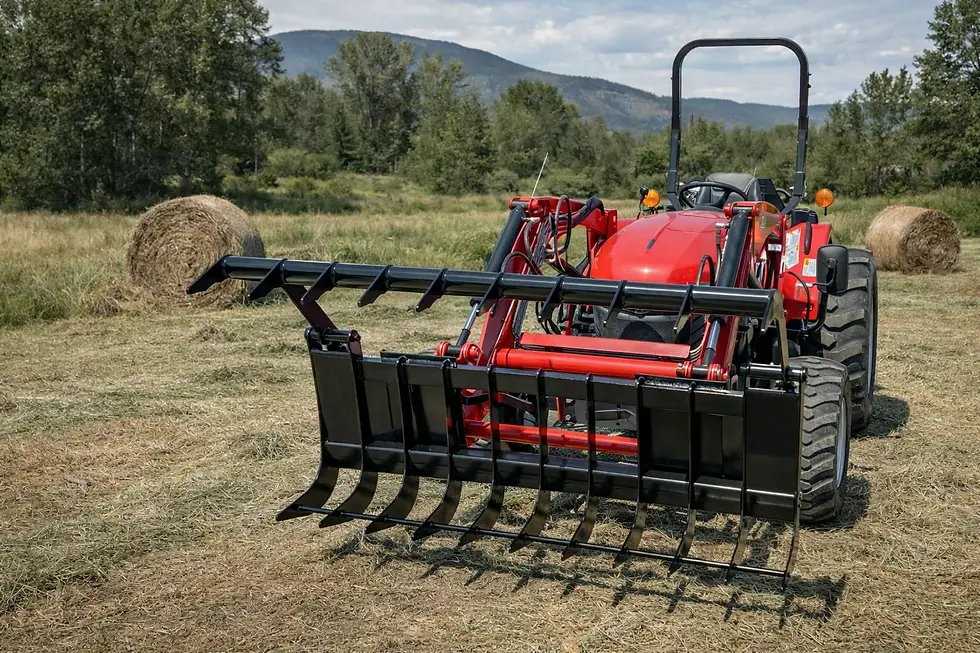
Tractor Grapple Attachment vs. Skid Steer Grapples: What’s the Difference?
One of the most common searches we see is “tractor grapple vs skid steer grapple.” While the two can look similar, they are built for very different machines.
Tractors typically operate at lower hydraulic pressures and lighter operating weights. This means a tractor grapple must be engineered to maximize strength without unnecessary weight. Skid steers, on the other hand, can handle heavier attachments but put significantly more stress on pins, cylinders, and welds.
At ANBO, grapples are designed around the machine's horsepower they’re intended for, not as a one-size-fits-all solution. This ensures better performance, longer service life, and less wear on your equipment.
The Steel Makes the Grapple
Another top search in this space is “grapple steel quality.” Not all steel is created equal. Lower-cost grapples often use thinner, imported steel to reduce material costs. While this may look fine on day one, it shows its weaknesses under uneven loads, twisting forces, and repeated clamping. ANBO builds grapples using high-strength, USA-sourced, AR400F steel engineered to handle real work. Thicker tines, reinforced cross members, and proper stress distribution mean less flex, less fatigue, and a longer lifespan, especially when handling logs, rocks, and brush.

Single vs. Dual Cylinder Grapples: The Bigger Picture
Buyers frequently search “single vs dual cylinder grapple.” While cylinder count is often debated, it’s only one part of the equation. A well-engineered grapple distributes force evenly across the entire attachment. Poorly built grapples may rely on a single cylinder as a cost-cutting measure, but that usually comes with other compromises, such as weaker steel, non-greaseable pins, or lighter-duty welds.
ANBO designs grapples based on total structural integrity, not just cylinder count. Every component is selected to work together under real-world conditions.
What Defines a Quality Grapple Attachment?
When comparing grapple attachments, look beyond the price tag. High-quality grapples share a few key traits:
• Proper steel thickness in high-stress areas
• Reinforced tine design to resist bending
• Greasable pins and serviceable components
• Clean, consistent welds
• Designs matched to machine size and hydraulic capacity
These aren’t optional features; they’re what separate a grapple that lasts a season from one that lasts decades.

Built Once. Built Right.
For over four decades, ANBO has been building attachments designed to outlast the machine they’re mounted on. Family-owned and USA-based, every grapple is engineered with the mindset that this tool will be used hard, not babied.
If you’re searching for the best grapple attachment for tractors and skid steers, focus on how it’s built, not just how it’s priced. A quality grapple doesn’t just move material; it protects your equipment, saves downtime, and delivers consistent performance year after year.
Buy once. Cry once. Work forever.


Comments